

As the hands of the clock passed 11pm on Wednesday 18 March, I was still in the chamber of the House of Lords listening to a debate about decriminalising abortion by the mother up until the eve of birth. This was the import of Clause 208, which a Labour MP had tacked onto a vast Crime and Policing Bill and had received just 46 minutes of consideration in the House of Commons. The rationale for the clause is that women who commit late abortions do so under duress and therefore deserve support and counseling, not police investigation and the threat of punishment.
Since the debate took place at the Report stage of the bill, there was no formal list of speakers. I was advised that convention has it that every peer who had laid an amendment or put their names to one should be allowed to speak first. Since I had done neither, I should wait before rising. So, I waited. And waited.
Because Clause 208 is part of a huge bill, there were four hours devoted to other clauses—not least on terrorism—before we arrived at it at 8.40pm. Then, following two hours of debate, the Chief Government Whip, who controls the process and interprets the mood of the House, decided it was time to move to the closing speeches given from the Government and Opposition front benches.
So, the noble Lord Biggar never got to deliver his speech and the six hours he’d spent crafting it came to naught. Well, not quite. For, that speech comprises this week’s episode of The Biggar Picture.
MY LORDS, I rise to speak in favour of amendment 424, tabled by my noble friend, Baroness Monckton of Dallington Forest. I have two comments to make.
First, in recent weeks I’ve read lots of speeches, statements, and letters urging support of Clause 208, which would decriminalise abortion up to birth in the case of the mother. Without exception, every one of them told only half the truth.
Each talked as if the only consideration is whether a mother should have the right to ‘end her own pregnancy’ up to the eve of birth, without having to suffer the distress of a police investigation. Without exception, it failed to mention that what’s involved in ‘ending a pregnancy’ is the deliberate killing of a well-developed fetal human being.
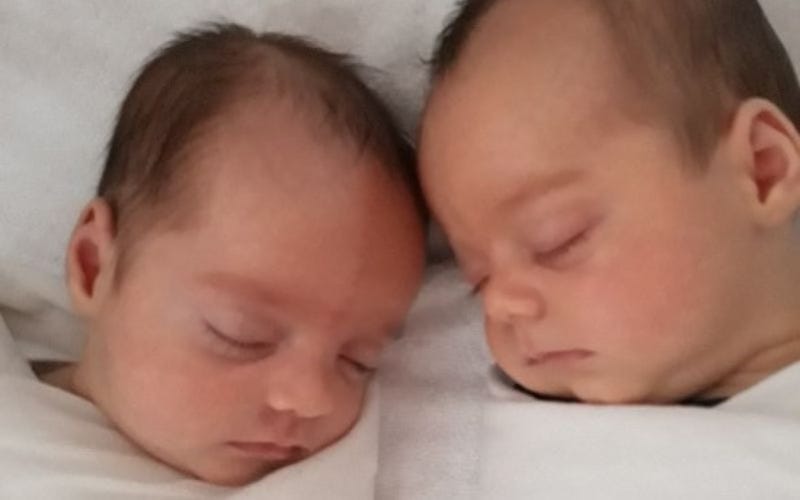
Now, my lords, I’m not against killing human beings as such. Whether it’s right or wrong depends on the circumstances. Sometimes, tragically, it can be morally right. Indeed, some of your lordships may think it morally right for a mother to kill her human fetus on the eve of birth and escape criminal liability. So be it.
But can we at least be frank that that is what we are talking about? Can we not avert our eyes from the moral question, Does the mental wellbeing of the mother justify the killing of her fetal child?
Yes, my lords, it is true that Clause 208 would leave unmoved the legal limit of abortion at 24 weeks, still making abortion a crime when conducted by anyone other than the mother. Nevertheless, to make such maternal killing no longer a crime would be to imply that it’s an act of no consequence. And that, in turn, implies that the life of the human fetus is a thing of no consequence. But if that’s the case, why should there remain any limit on the killing of the unborn at all?
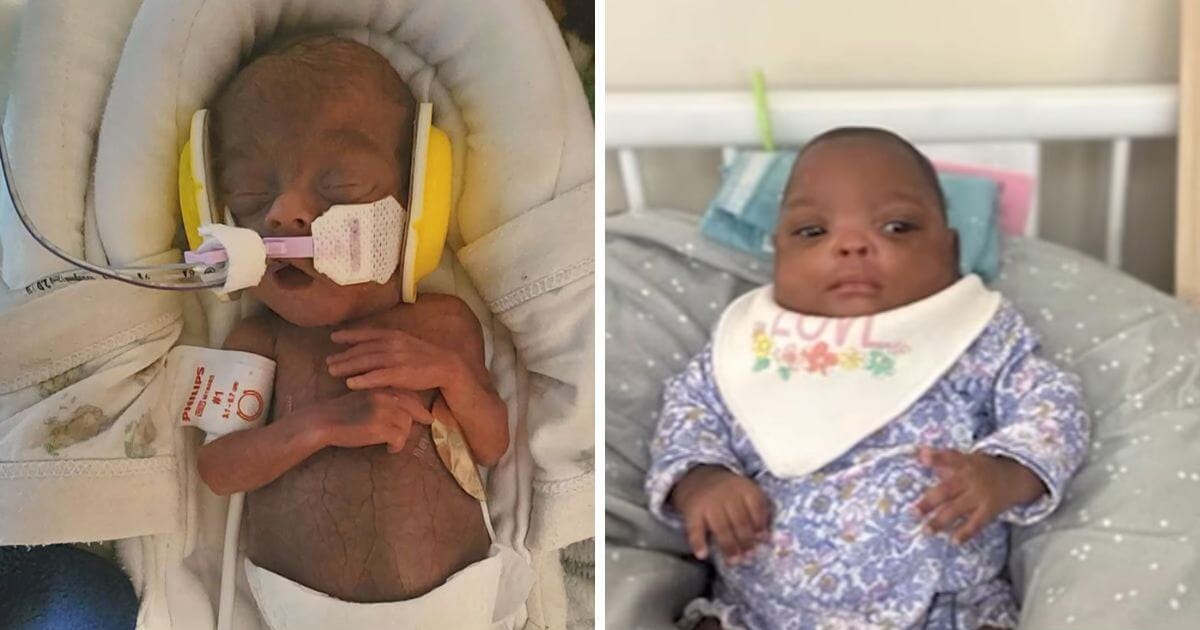
Secondly, my lords, there’s not a noble person in this chamber who wasn’t a well-developed fetal human being. All that separates us from our fetal selves are time, good fortune, and being supported rather than killed. With a fair wind, the human being’s development—from about a fortnight after fertilisation—is a continuous process.
That’s why some people take the very conservative view that we should treat the human being from the very beginning exactly as we treat adult humans, possessing the same rights against deliberate harm.
I don’t myself take that position. But those of us who don’t take it have to face the fact that, shortly after fertilisation, it becomes impossible to draw a thick black line before which we can say with confidence that there doesn’t exist a person with rights, but after it, suddenly, there does.
There is, for example, no significant difference between a human fetus on the eve of birth, and its infant self the day after. Yes, the fetus is physically attached to the mother by an umbilical cord. But the detached infant remains no less radically, physically dependent upon the mother. If she doesn’t feed and protect it, it’ll die.
So, my lords, if we approve Clause 208, decriminalising abortion by the mother up to birth, we will breathe down the neck of decriminalising maternal infanticide. If the law permits a mother to kill her late-term fetus, there’s no strong reason why it shouldn’t also permit her to kill her infant.
Now, your lordships might protest that legalising infanticide is unthinkable. You might even be tempted to consider the noble lord Biggar provocatively alarmist. If so, I imagine the noble lord Biggar might be tempted to consider his colleagues recklessly complacent.
And that, for three reasons.
First, plenty of societies have found, and do find, infanticide—especially of females—not just thinkable, but perfectly doable.
Second, what’s unthinkable now can easily become thinkable later. After all, to our predecessors on these red benches a few decades ago it would have seemed unthinkable to contemplate decriminalising late-term abortions. And yet here we are.
And third, it’s now fourteen years since arguments advocating the morality of infanticide first gained admission to the respectable pages of the Journal of Medical Ethics.
My lords, humane society corrodes by increments. To permit the killing of human beings up to the eve of birth by anyone would be one more increment, and not the last.
So, that’s why I support amendment 424, to exclude Clause 208.
Throughout the debate, not one of those speaking in support of Clause 208 mentioned the inconvenient truth that late-term abortion involves the killing of a well-developed fetal human being. And speeches against the clause were subjected to aggressive interventions. When it came to a division, amendment 424, which would have removed Clause 208, was defeated by 185 votes to 148.
On the Saturday following the House of Lords debate, the Times newspaper published an article by Janice Turner, entitled, “Left has a moral blindspot on human life” (20 March 2026). Although she describes herself as a “lifelong pro-choice advocate”, Turner’s viewpoint echoes my own:
The body of an almost full-term newborn baby is found in a skip, and the mother is traced. After the Crime and Policing Bill gets royal assent later this year, an investigation would take two courses. If she is believed to have, say, smothered the child after birth, she may be charged with infanticide, an offence which, taking into account postpartum mental illness and distress, is tried (if at all) as manslaughter not murder.
But if the mother claims the child died in utero, because she took abortifacient drugs, the case will close. Whatever her reasons for doing this, the baby’s death is not a crime. Indeed, thanks to Clause 208 of the bill, which removed women who end their own pregnancies from the criminal code, it isn’t even a baby. It is nothing at all.
I’m a lifelong pro-choice advocate, have defended abortion rights many times on these pages, yet I find this decision — whose passage in the Lords this week was hailed a feminist triumph — viscerally upsetting. It is one thing to argue that police protocols should change or prosecution guidance appreciate that women who abort late and alone often do so in extremis. It is a huge leap to decriminalise the taking of a fully viable human life.
‘Humane society corrodes by increments’. Such a pithy, succinct truth.
https://francisschaefferstudies.org/francis-schaeffer/works?whatever-happened-to-the-human-race
Francis Schaeffer & C Everet Koop predicted this nearly 50 years ago…