

Tragic constraints
The human condition often lands us in situations where there is no morally pure option. We often find ourselves in situations that are more or less walled in by historical fate. As Joseph Chamberlain, British Colonial Secretary, commented on imperial policy in South Africa in 1900, “We have to lie on the bed which our predecessors made for us”.[1] In situations thus constrained every choice is fraught with risk, sometimes the stakes are very high, and ethical clarity about the right way forward does not lie easily to hand. Therefore, those who nevertheless have to wrestle their way to a decision deserve our sympathy. Indeed, insofar as they have deliberately chosen to make themselves liable to such wrestling—whether in government or the military—they deserve our admiration.
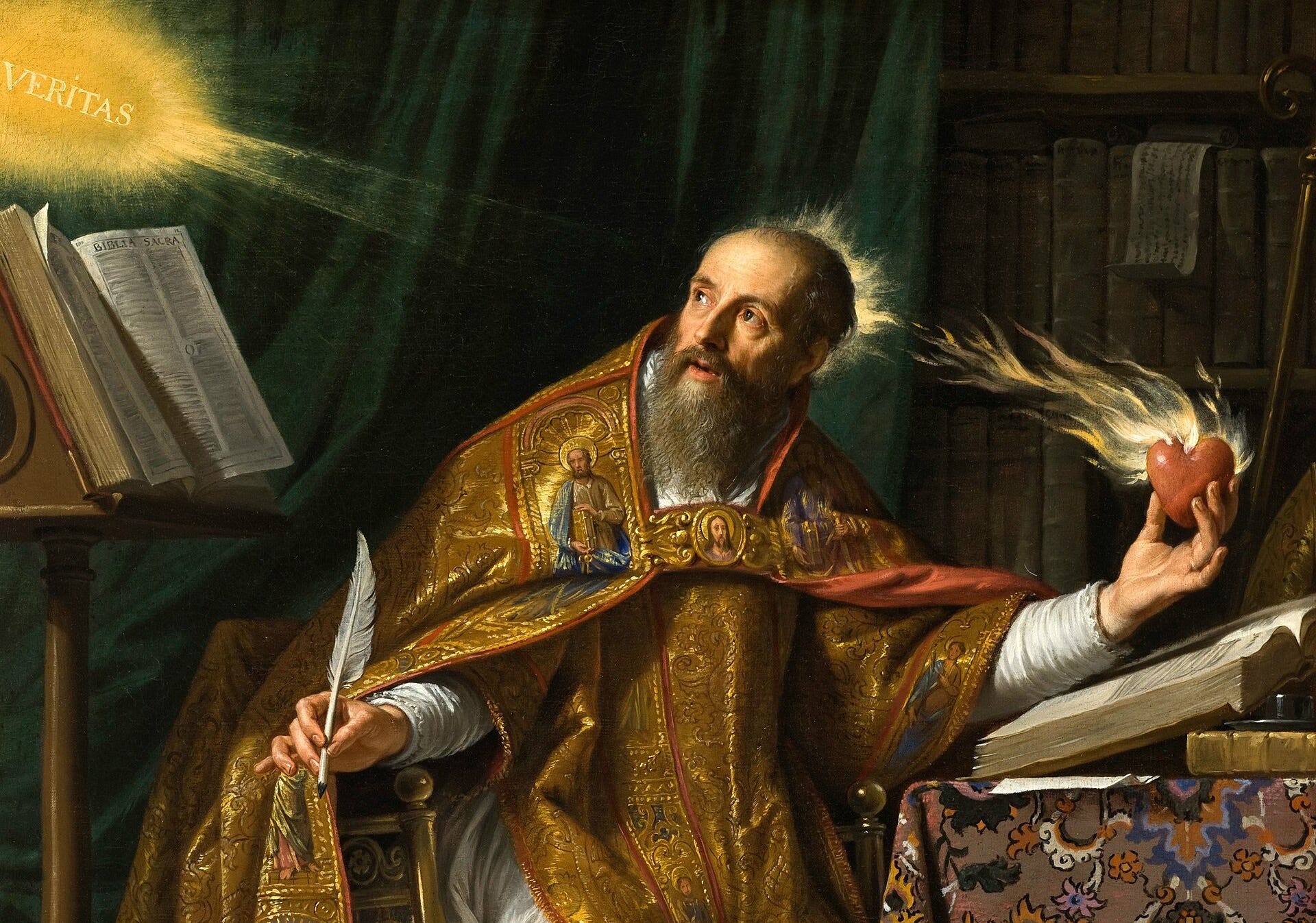
It was such admiration that caused me to move from the academic discipline of History to Theology forty years ago. During my undergraduate career as an historian, I stumbled into a course on the life and times of St Augustine in the Late Roman Empire. Augustine, who was bishop of Hippo in what is now Tunisia, wrote a letter in the year 408, in which he touched upon the dilemmas of judicial interrogation, which in those days often involved what we would call ‘torture’. So he writes:
On the subject of punishing or refraining from punishment, what am I to say? It is our desire that when we decide whether or not to punish people, in either case it should contribute wholly to their security. These are indeed deep and obscure matters: what limit ought to be set to punishment with regard to both the nature and extent of guilt, and also the strength of spirit the wrongdoers possess? What ought each one to suffer?… What do we do when, as often happens, punishing someone will lead to his destruction, but leaving him unpunished will lead to someone else being destroyed?... What trembling, what darkness!… [And then he quotes Psalm 55:] ‘Trembling and fear have come upon me and darkness has covered me, and I said, Who will give me wings like a dove’s? For then I will fly away and be at rest’….”.[2]
But Augustine did not flee. He did not run away. He stayed. He continued to shoulder the responsibilities of bishop, which, as the Roman Empire crumbled around him, were increasingly those of government. He kept up pastoral correspondence with military tribunes like Boniface and Marcellinus, whose Christian consciences were troubled by having to use the sword to keep the peace. With them he lamented the tragic dilemmas of government, but he did not flinch from facing them. And for that I have loved him ever since—and I admire those like him.
There needs, however, to be a limit to sympathy, unless we are to bless every compromise. Some compromises, surely, are bad ones. We may sympathise with those forced to make them but still judge their decision to be wrong. So, what is it that makes a compromise bad? When does it become morally wrong? What are the moral bottom-lines that should constrain our compromising? And, by implication, when is it morally okay to compromise? These are the questions whose answers I shall pursue here.
Compromise, evil, and regret
I take a compromise to be a decision that deliberately involves a loss of good—that is, an evil. It involves either conceding an opportunity to maintain or promote a good or becoming a part-cause of evil. Therefore, compromise should always cause one who consents to it to feel regret—or, more specifically, what Stephen de Wijze calls ‘agent-regret’: the agent should regret that he himself has become party to a loss of good.[3]Straightaway we discover the first feature of bad compromise: a lack of regret on the part of the one who makes it.
Regret, however, is not the same as moral guilt. It is not always morally wrong to permit or even to cause evil. Sometimes, there is what certain Roman Catholic ethicists call ‘non-moral evil’. When it is morally right, the unavoidable causing of evil is non-moral, cannot be culpable, and should not attract feelings of guilt. Therefore, with due respect to the proponents of the idea of ‘dirty hands’, a compromise that it is morally right to make, all things considered, cannot retain elements of moral wrongness. A paradigmatic case of ‘dirty hands’ is the so-called ‘ticking bomb’ scenario, where a politician authorises the torture of a terrorist, who is known to have accurate information about the location of city-centre bombs intended to kill masses of civilians.[4] De Wijze’s ‘dirty hands’ view is that torture is always and everywhere wrong, but that there might rare cases—such as the ‘ticking bomb’ scenario—where it is the right thing to do. It can be right to do wrong, to get one’s hands morally dirty: that is the paradox.
I tend to resist paradoxes. Temperamentally more Jesuit than Lutheran, I tend to think that paradoxes are merely the point at which a certain line of thinking has run into the sand, and that there must be an alternative line of thinking that will resolve them. That is what I think here. For example, if there are cases where it is morally right to torture, then these are cases when torturing is not morally wrong. Consequently, we should be moved to reconsider the absolute rule, the kind of action it intends to prohibit, and why the action in this case does not belong to that kind. In other words, such cases should provoke us to tighten the scope of the rule, so as to exclude them. I myself have argued elsewhere that we should distinguish ‘torture’, which is wicked by definition, from ‘aggressive interrogation’, which intentionally inflicts pain on another human person, not out of sadism, but intending to preserve the innocent against grave injury, and as a necessary and proportionate last resort. Such ‘aggressive interrogation’ should remain illegal, to prevent institutional habituation and corruption, but it can still be moral, and courts should prepare themselves to recognise it, somehow, as such.[5]
