

I
Without considerable native participation, colonial rule in the African continent and the Indian subcontinent wouldn’t have been possible.
Two weeks ago, I flew to Qatar to take part in a recorded discussion about empire. Funded by the Qatar Foundation, my host, Doha Debates, does the admirable, but sadly rare thing of mounting long-form discussions of controversial issues. In my case, it lasted two-and-a-half hours, of which Al Jazeera will broadcast an edited forty-five minutes. Bearing fresh scars from my recent ‘interview’ with Mehdi Hasan on Al Jazeera, I had initially been wary of the invitation. In Hasan’s case, I had stepped naively onto a stage in London, only to find myself in a gladiatorial arena, where my ‘interviewer’ got to play prosecutor, referee, judge, and crowd-pleaser all at once. The playing field was not exactly level. So, before I agreed to go to Qatar, I asked advice from two friends with experience of the Middle East. They both assured me that the Doha Debates were serious, in -good-faith affairs.
And so was mine.
The discussion took place on a Tuesday afternoon and was moderated by a man named Mohammed. The others around the table were Inaya Folarin Iman, a former GB News journalist and founder of the Equiano Project; Dr Ian Almond, a postcolonial scholar of literature at Georgetown University School of Foreign Service in Qatar; and Professor Gurminder Bhambra, a postcolonial scholar of social theory at the University of Sussex. I had encountered Gurminder before at the Mehdi Hasan event, where she was the panellist who claimed that, before the British came to control Bengal in the 1760s, there had been no famine. At the time, I didn’t know enough to contradict her. But I checked afterwards with the Bengali-born historian of colonial economics at the London School of Economics, Tirthankar Roy. She was wrong: famines occurred intermittently in India throughout the 1600s and into the 1700s. And even after the British had acquired territorial control of Bengal in the 1760s, it occurred in northern India outside their jurisdiction in 1783-4.
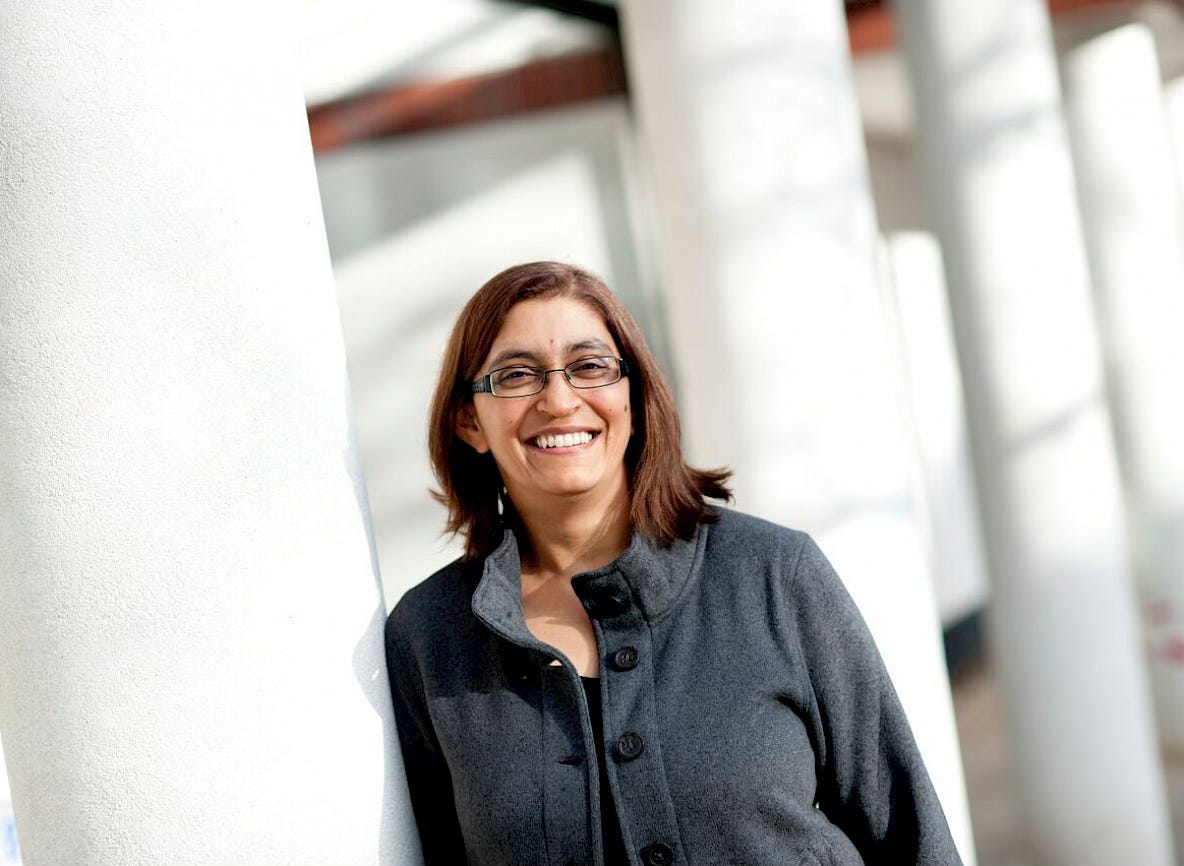
Here, I’m going to reflect on the debate in Doha, focussing mainly on my exchanges with Gurminder, since she seems to me a faithful representative of the ‘decolonising’ point of view. I shall try my best to give an accurate account of our encounter. How far I succeed, readers can judge for themselves from the broadcast recordings. But even if we were to agree on who said exactly what, I have no doubt that Gurminder’s interpretation would be very different from mine. However, these are my reflections, not hers.
As she expressed it, Gurminder’s general view is that the post-imperial West, not least Britain, is responsible for present unjust structures that continue to oppress and exploit the Global South; that all empires can be divided into two categories, ones of ‘participation’ and ones of ‘extraction’; and that the British Empire belonged firmly in the latter. At one point, when the moderator put the topic of the benefits of British Empire on the table, she immediately issued the rhetorical challenge, “What benefits?”. Such a starkly absolute judgement I have come to regard as typical of postcolonial academics.
