

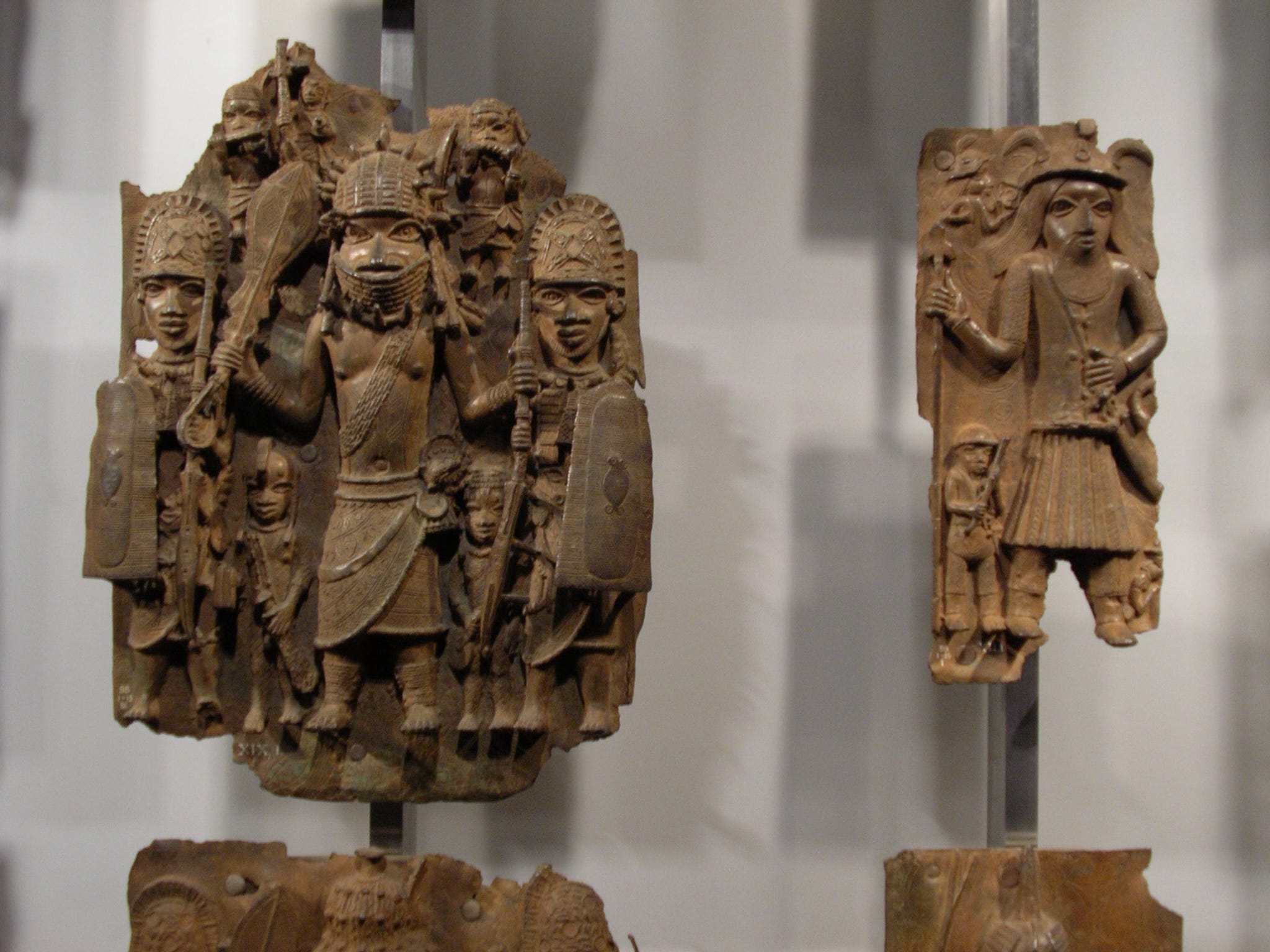
Ever since the Black Lives Matter protests of 2020, cultural institutions in Britain have been falling over themselves to signal their virtue by ‘decolonising’. Among the first were Jesus College, Cambridge and the Horniman Museum in south-east London, which sent back to Nigeria ‘Benin Bronzes’ taken by the British in a military expedition of 1897.
Never mind that the bronzes were icons of African-led enslavement, forged out of brass objects used as currency in the intra-African slave-trade. Never mind that Benin practised not only slavery, but human sacrifice. Never mind that the military expedition was launched in response to the slaughter of an unarmed embassy and resulted in the abolition of slavery. And never mind that the bronzes weren’t looted but taken according to the laws of war, to defray the expedition’s costs and fund pensions for war widows. Never mind the historical truth, they were surrendered in a heedless mania of atonement for imaginary sins.
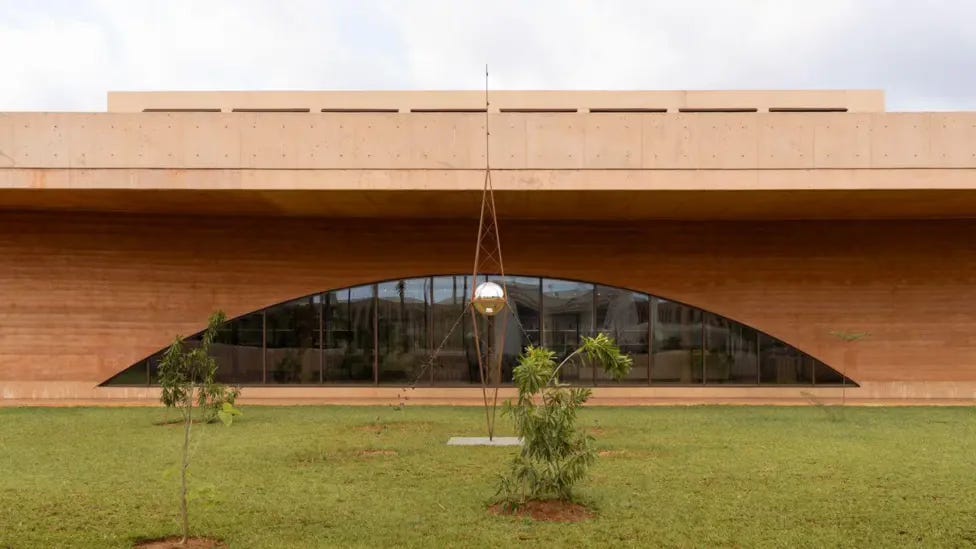
And yet, since their celebrated return, not a single bronze has gone on display in Benin city’s purpose-built, Museum of West African Art, partly funded by the British Museum. This is because Nigerians cannot agree to whom the bronzes belong—whether the federal government, the Edo state, or the descendant of Benin’s ruler in 1897. As MOWAA’s director Phillip Ihenacho has commented, “In the west, there was a race about who was going to be the first institution to restitute… there wasn’t enough of a focus on to whom they would be restituted”.
Recently, the British Museum’s director, Nicholas Cullinan, has developed a more thoughtful, less craven way of responding to ‘decolonising’ pressure. Instead of surrendering objects allegedly stolen from India by the British, he’s dispatching 80 items from ancient civilisations contemporaneous with that of the Indus Valley on loan to Bombay, enabling a museum there to show how India was a cradle of civilisation. As Cullinan puts it, “You don’t have to embarrass your own country to do something with another country”.
That won’t stop Cullinan’s Hindu nationalist partners from making ‘decolonising’ capital out of the loan. The director of the Bombay museum, Sabyasachi Mukherjee, has already claimed it will help to “correct colonial misinterpretation” of India’s past. “Through this exhibition, there is decolonisation, an attempt is made to decolonise the narrative. We suffered for many years and colonisation penetrated into our education, our culture”.
Never mind that it was Britons like Sir William Jones and Warren Hastings who rescued classical Sanskritic civilisation from oblivion in the late 1700s, undermining the Eurocentric assumption of the primacy of Greece and Rome. Never mind that, according to Nirad Chaudhuri, they “rendered a service to Indian and Asiatic nationalism which no native could ever have given. At one stroke it put the Indian nationalist on a par with his English ruler”, giving him the material out of which to build “the historical myth” of a Hindu civilisation superior to Europe’s. And never mind that, on the other hand, it was the Hindu social reformer, Raja Ram Mohan Roy, who lobbied the British in the 1820s against funding a college to support traditional Sanskrit learning—”the best calculated to keep this country in darkness”—and in favour of educating “the natives of India in mathematics, natural philosophy, chemistry, anatomy, and other useful sciences, which the nations of Europe have carried to a degree of perfection that has raised them above the inhabitants of other parts of the world”. If his Indian counterparts choose to abuse the historical truth in the service of nationalist ideology, Nicholas Cullinan can hardly be blamed for it.
What’s more, his “new model” of cultural diplomacy is faithful to the British Museum’s mission to be universal rather than national. In countries with insecure or troubled identities—such as Singapore and Hungary—museums are devoted to telling and reinforcing the nation’s story. In contrast, since its foundation in 1753 the British Museum has used global networks created by imperial expansion to collect objects, with a view to comparing human cultures the world over, noting not only their creative diversity, but also what they share in common. In the face of strident nationalisms built on racially divisive lies about the past, it is vitally important that the British Museum stays true to its human calling and resists groundless calls to disperse its universal collection.
Thank you, Nigel. One of my issues is that of Church England putting aside £100 million to send to countries by way of reparations.? Do I have
that right first of all?
Best wishes for a productive and enjoyable New Year.
I look forward to your next contributions…