

I
Nation-states are run by human beings, not by gods or saints. Any state of longstanding will have a record stained by error, folly, and evil. Still, states are not always run by devils incarnate. What’s more, some of them have been induced by the Christian Church to adopt a morality that, with the model of the prophet on mental centre-stage, holds the human individual and his responsible liberty in high esteem. Sometimes, therefore, states have chalked up major humanitarian and liberal achievements.
An empire is no different, being merely a certain kind of state. Indeed, for most of history it has been the usual kind of state. As John Darwin, the eminent historian of British and global empire, has written, “empire (where different ethnic communities fall under a common ruler) has been the default mode of political organisation throughout most of history”.[i] Present day nation-states are often the product of the imperial evolution of one part. England in the 10th century was the product of the imperial expansion of the Kingdom of Wessex. France came to cover most of its present territory through the expansion of the Kingdom of Frankia from the 800s to the 1700s. The United States is the product of the expansion of English enclaves on the eastern seaboard of North America.
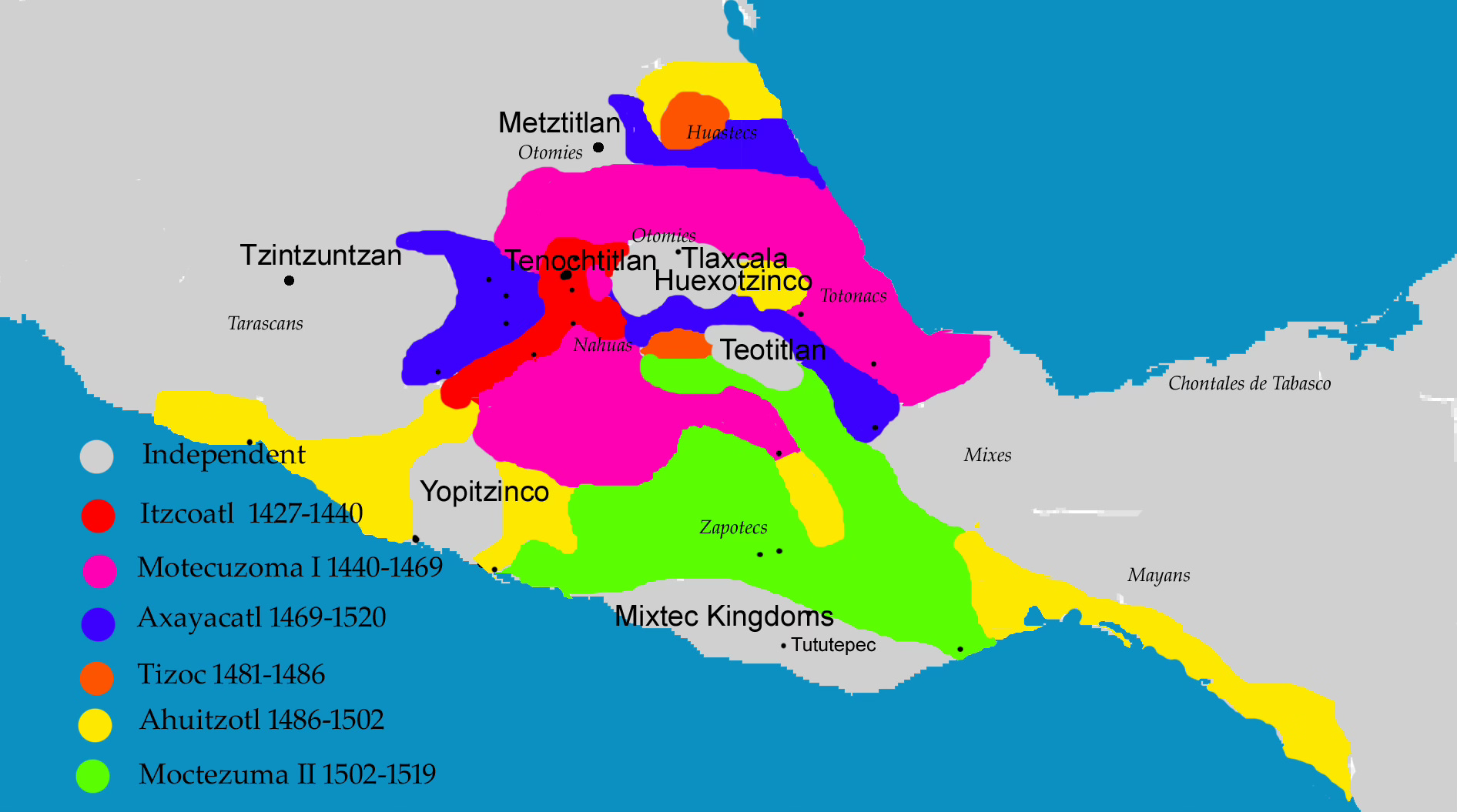
We should not fall into the mistake of supposing that only Europeans have done empire. The Chinese have been doing it since ancient times. The Incas and Aztecs were doing it in southern and central America in the 1400s and 1500s. The Iroquois confederacy of native Americans was doing it around the Great Lakes in the 1640s. The Comanche, in what is now the south-west of the US, in the 1700s. The Zulu, in southern Africa in the 1820s. The Māori, on the Chatham Islands in 1835. And the Japanese, in East Asia the 1930s and ‘40s. Europeans were latecomers to the imperial game.
We might assume that empires are, of their nature, always oppressive, involving the coercive imposition of superior power on unwilling subjects. That would be both right and wrong. No doubt, every longstanding state has indulged in morally unjustified conquests and domination. But unless one thinks that coercion is never justified—as the mainstream Christian ‘just war’ tradition does not think—then the sheer fact that an empire conquers and dominates does not tell us how to think ethically about it. For example, the American empire conquered and dominated Japan in 1945 and imposed a foreign form of government on it. But many people will suppose—rightly, I think—that the unprovoked attack on Pearl Harbour in 1941 justified the conquest, and the postwar imposition of liberal democracy in place of political militarism justified the domination. We need to judge each case on its ethical merits.
Moreover, it is a mistake to assume that imperial rule is always unwelcome. Commenting on his experience as an aid-worker in the Punjab shortly after Pakistan’s independence, the Irish-American Charles Westwater has testified that, “[i]n 14 years I heard nothing but praise for the English colonial rulers, even from those who had served time in prison for one reason or another. When the suggestion was made that, given the choice, the people might have voted for the British to leave, an office peon corrected me with: ‘You’re wrong, sahib. Ninety-five per cent of the people would have voted for the British to stay’.”[ii]
II
Turning to the British Empire, we can observe that it contained its fair share of errors, failures, and evils—both innocently inadvertent and culpable. That should not surprise or horrify, since it would be true of any state run by sinful, finite human beings over four hundred years from, roughly, 1560 to 1960. Thus, it contained the inadvertent but devastating spread of disease in North America and Australia; involvement in trans-Atlantic slavery; failures to avert massively lethal famine; instances of the disproportionate and atrocious use of violence; miscarriages of justice; economic exploitation; and demeaning racial prejudice.[iii]
This is not a paywall. Readers can continue to read by becoming free subscribers of the Biggar Picture.
[i] John Darwin, After Tamerlane: The Global History of Empire since 1405 (London: Allen Lane, 2007), p. 23.
[ii] Charles Westwater, letter to The Tablet, 29 March 2003, p. 15.
[iii] For a fuller list of the evils, inadvertent and culpable, caused by the British Empire, see Nigel Biggar, Colonialism: A Moral Reckoning (London: William Collins, 2023, 2024), p. 276.
[iv] See Nigel Biggar, Reparations: Slavery and the Tyranny of Imaginary Guilt (London: Swift Press, 2025), Chapters 6 and 7.
[v] According to the World Values Survey 2023 only 5 per cent of British respondents objected to having immigrants as neighbours and only 2 per cent to neighbours of a different race—roughly the same as Norway (5 and 3 per cent), Sweden (3 and 1 per cent) and Germany (4 and 3 per cent). The United States (8 and 3 per cent), Australia (9 and 4 per cent), and Canada (9 and 4 per cent) also returned some of the lowest scores. All of these former members of the British Empire scored far better than Iran (42 and 28 per cent), Russia (32 and 16 per cent), China (26 and 18 per cent), and Japan (30 and 15 per cent). See Suzanne Hall et al., Love thy Neighbour? Public trust and acceptance of the people who live alongside us, the UK in the World Values Survey (London: Policy Institute at King’s College London, April 2023): https://www.kcl.ac.uk/policy-institute/assets/love-thy-neighbour.pdf (accessed 29 September 2026).
[vi] Biggar, Colonialism, pp. 285-7.
[vii] Margery Perham, The Colonial Reckoning, The Reith Lectures 1961 (London: Collins, 1961), p. 130. In writing of a ‘progression in virtue’, Perham herself was referring specifically to British colonial Africa.
[viii] Atrocious violence did accompany the partition of India in 1947, but it was used by Hindus against Muslims (and vice-versa), not by the British to resist Indian independence. And the ‘Mau Mau’ insurgency in 1950s Kenya, which the British authorities used violence to suppress, was not a simple independence-movement. Most Africans, including independent Kenya’s first President, Jomo Kenyatta, supported the British.