

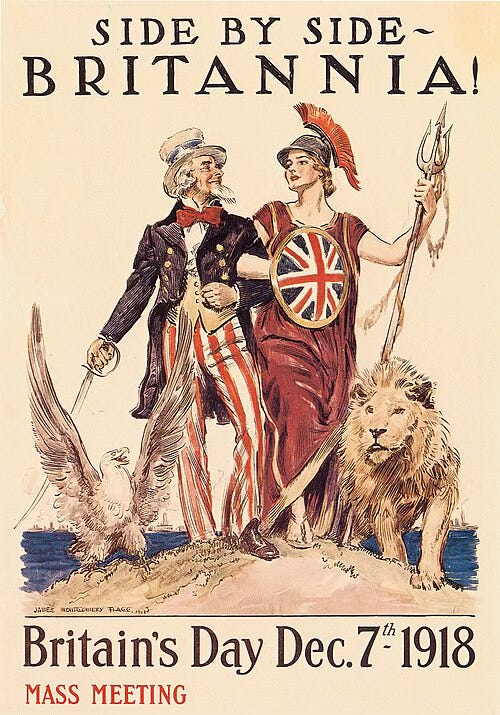
As a Briton, I rejoice that the United States was born. But I would have preferred a different, bloodless birth. As is so often the case with conflict, the one between Britain and her American colonies in the 1770s had tragic elements. The British—rightly—thought that the colonists should make a greater contribution to the cost of their own defence during the French and Indian Wars through taxation. Understandably, however, the colonists resented the high-handed means by which the taxes were imposed. (Although, let’s be frank, some of them simply resented having to pay taxes at all, while others resented imperial constraints on invading Indian lands west of the Appalachians.) The result was a civil conflict—as much between Americans as against the British—which is typically the bitterest kind of war.
That said, the bloody rupture that was the birth of the US had several beneficial side-effects. If the American colonies had remained part of the British Empire into the 19th century, it would have made Britain’s abolition of the slave-trade and slavery in the early 1800s, and its subsequent role in suppressing them worldwide, politically impossible.
Further, the American example of mass democracy surely heartened democrats in Britain and France and promoted their cause.
And further still, the American War of Independence taught the British the important lesson that London couldn’t impose tight control on far-flung colonies. It had to allow greater autonomy. That’s why, starting with Canada in 1867, all the ‘dominions’ (New Zealand, Australia, and South Africa) acquired increasing self-control, so that by 1931 they were virtually autonomous states. After a failed attempt in the early 1900s to bind the disparate members of the Empire in a US-style federation, the view prevailed that the Empire should relax into a voluntary association of independent members, ‘the British Commonwealth of Nations’.
During the 20th century, the United States proved itself a consistent champion of political liberty, first against Prussian militarism in the first world war, then against Nazism and brutal Japanese imperialism in the second, and finally against Soviet and Chinese Communism in the Cold War. Without the US’s commitment of resources of manpower and materiel in the last two cases, the free world would have struggled to survive outside of North America. So, we in Britain and in the other liberal democracies have needed American aid—desperately in 1940-45—and we are grateful to have received it. America’s ascendancy has served us well.
Nonetheless, even hegemons are seldom self-sufficient. The British Empire almost never fought a war all by itself and when it did in 1775-83, we all know what happened. Similarly, if Britain hadn’t held out in 1939-41, the US’s ability to dislodge Nazism would have been severely diminished. Imagine trying to invade Europe across a U-boat-infested Atlantic against an enemy who’d got to the atom bomb first. And when Americans fought in Korea in 1950-3, they did so alongside Britons, Canadians, Australians, and New Zealanders. The Antipodeans even took part in the Vietnam War. More recently in Afghanistan, the British spent almost as much blood per capita of population as the US: 0.00068, as against 0.00074.
The US needs allies. For sure, it needs allies who bear their fair share of the military burden, and so it has had every reason to rattle Europe’s complacent cage. Yet, let American exasperation be tempered by the thought that, once upon a time, it was the exasperated British who rattled the American colonial cage for exactly the same reason.
Yet, if the US needs us to help keep Russia at bay in the North Atlantic, as well as on the European continent, we certainly need the US. But we need a reliable, consistent US. We need a US that doesn’t scuttle from Kabul without informing us. We need a US that doesn’t attack Iran without consulting us and then threaten punishment when we decline to help clear up the Gulf of Hormuz.
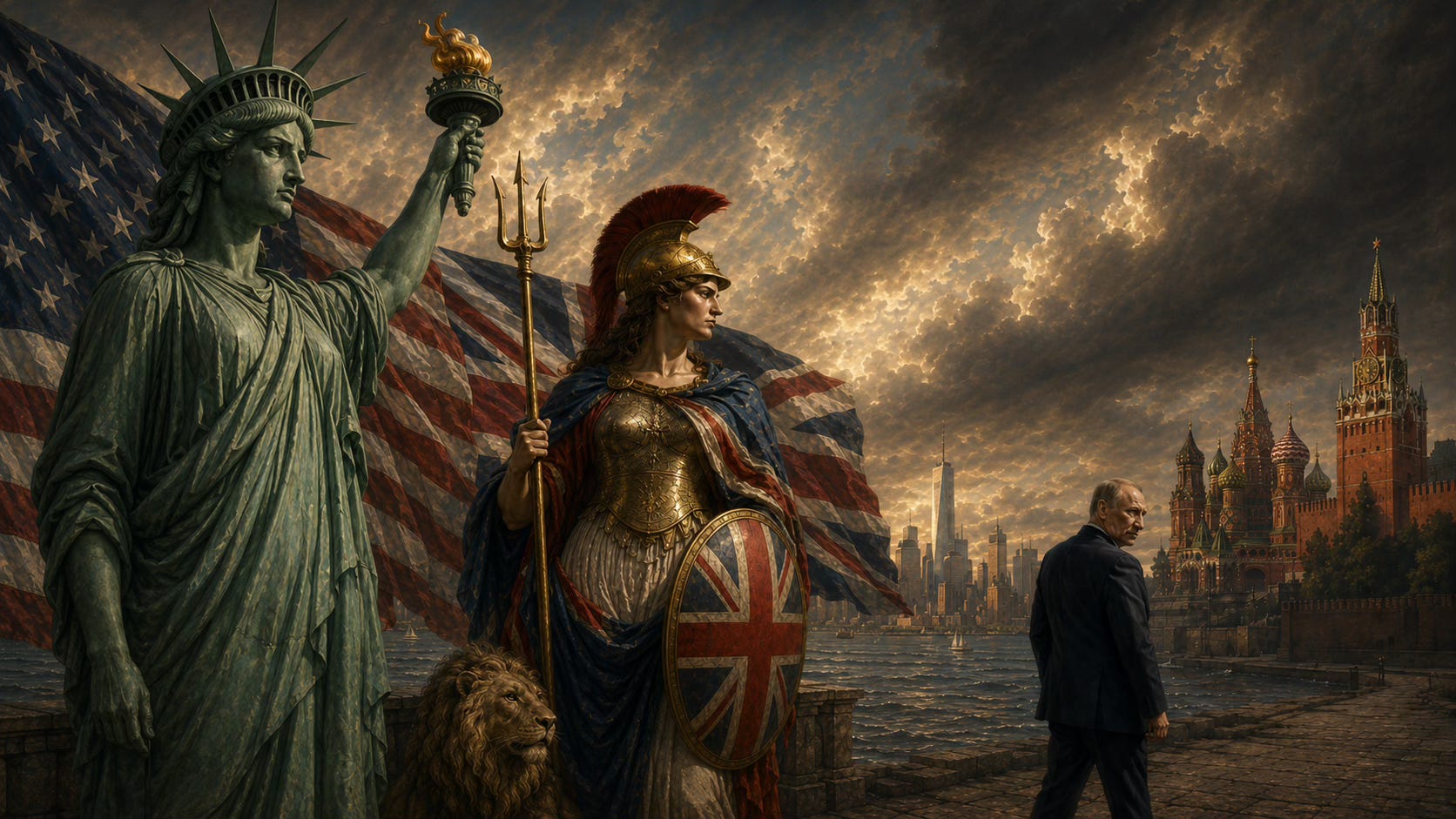
So, happy 250th birthday, America! We’re glad you were born. We’re grateful for what you’ve done for us. And we sincerely hope to march shoulder to shoulder with you into the anxious future. For, if we don’t hang together, we will surely hang separately.
I think sentiment can be politically powerful, but it won’t trump national interest. Not should it—provided that national interest is enlightened.
Tricky chaps alliances and friendships. I remember once working late in the MoD as a junior officer when I heard someone come into my office and sit down by my desk. I looked up and was surprised to see Admiral Fieldhouse. We chatted about matters of the day and amongst other friendly advice he warned me never to mistake allies for friends.