

From the late 1990s, Indian governments began to change the official names of some prominent cities—from ‘Bombay’ to ‘Mumbai’, ‘Madras’ to ‘Chennai’, and ‘Calcutta’ to ‘Kolkata’. Shortly afterwards, British journalists followed suit. Noticing the change, I made sense of it on the grounds of courtesy: after all, if that’s what Indians want to call their cities, why should we object? Still, I was uneasy, half-intuiting that something less innocent was going on.
Now, I see that my intuition was on the button. Recently reading John Keay’s 1991 history of the East India Company, The Honourable Company, I learned that the three great port cities all owe their existence to it. Before the British arrived, Bombay comprised a set of seven separate islands, Madras was a fishing village, and Calcutta a cluster of three villages. According to Tirthankar Roy, the Bengali-born professor of economic history at the London School of Economics, by providing security, political stability, and impartial justice, the EIC attracted Indian artisans, merchants, and financiers from the interior, and so enabled the islands and villages to transform themselves into major ports and hubs of international trade.
The names ‘Bombay’ and ‘Calcutta’ are only slight Anglicisations of the native ones, and ‘Madras’ is a shortened version of ‘Madraspatnam’, the village where the EIC first built a fort in the 1690s. In other words, the colonial names are all rooted in their Indian locality—unlike ‘Chennai’, about whose origin there’s no agreement. It’s a novelty.
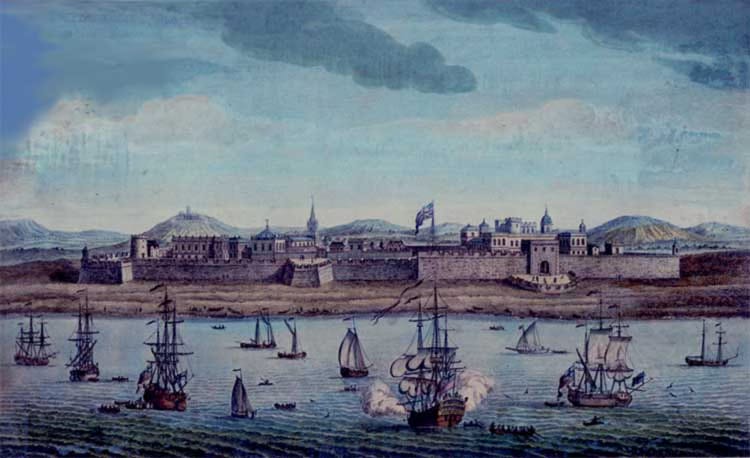
So, why were the changes made? Sometimes, innocently, to make the names sound more vernacular. But sometimes, less innocently, to assert an exclusively provincial identity. As Professor Roy protested at the time, “’Mumbai’ represents one of the traditions of the people of [Bombay]. ‘Bombay’ represents the city’s vibrant cosmopolitanism: the Portuguese and the British without whom the city would not exist, merchants from all of Asia and beyond, workers and artisans from north and south, multinational companies, global commerce, artists ... ”. Whereas ‘Mumbai’ signifies a divisive assertion of ethnic purity over diversity, exclusivity over commonality.
Still, if Indian governments have decided to change the official names of their own cities, that’s surely their business. Ours is just to suck it up. Well, only if we want to collude in the erasure of common, plural history in the service of divisively ethnic politics.
Besides, even if every Indian was content to use the new nomenclature—and, evidently, they’re not—why should we British follow suit? I can understand why the Foreign Office and its diplomats feel the need to defer to official practice in India and avoid alienating their Indian counterparts over mere words. But what about the BBC? When did you last hear a Beeb journalist or news presenter speak of the capitals of Italy, Austria, or Russia as ‘Roma’, ‘Wien’, or ‘Moskva’? And when did they last rebuke the French for referring to London as ‘Londres’ or Edinburgh as ‘Edimbourg’? So why do they speak of ‘Mumbai’, ‘Chennai’, and ‘Kolkata’? Answer: they’re slaves to verbal ‘decolonisation’, propelled by imaginary colonial guilt that does injustice to the complicated historical truth and the achievements of our ancestors.
This bad, ignorant, craven national habit needs to stop. Bring back ‘Bombay’!
If they rename Bombay Sapphire gin I shall stop buying it.
I fully agree. This is only article of yours I've read where I can honestly say I'd already reasoned myself to this position. I feel similarly about the recent fashion of the great and the good of referring to what we used to call "Kiev" as "Keev". After all, if other nations can have a different word for our country or cities, why can't we?