

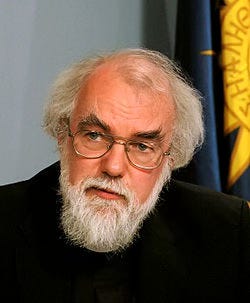
“Badenoch seems to assume that poverty is a lifestyle choice. Half an hour spent listening to clients at any local foodbank might persuade her otherwise”. Thus did the former Archbishop of Canterbury, Lord Williams of Oystermouth, scathingly dismiss further consideration of the Tory leader’s recent statements about Christianity, welfare, and the dignity of work.
Other clerics piled in. The Rt Rev Martyn Snow, the Church of England’s leading bishop on welfare and child poverty who applauded the budget’s lifting of the two-child benefit cap, asserted the Bible’s endorsement of the collective care of the vulnerable. And the Roman Catholic bishop of Arundel and Brighton, the Rt Rev Richard Moth, insisted that working families often have no choice but to claim universal credit and children face poverty though no fault of their own.
But the bishops mistake their Tory target. Both sides agree that some people need help and that the state should sometimes provide it. In choosing to deliver last month’s Wilberforce Lecture, Kemi Badenoch wholeheartedly identified herself with half a century’s worth of 19th century humanitarian campaign to rescue the oppressed in the form of African slaves. What’s more, she explicitly endorsed a direct role for the state in supporting the needy, where necessary. “Yes, the state matters”, she said. “No decent society abandons those with severe needs”.
Nonetheless, quoting St Paul’s First Epistle to Timothy, she affirmed the dignity of work and individual responsibility: “Our task is to remove the barriers that keep people idle when there is work to be done—skills mismatches that keep young people out of good jobs; perverse incentives that make welfare pay more than wages”. The bishops could hardly disagree. Surely, it’s best for individuals who are able to work and take responsibility for themselves and their families, to do so. It’s good for the morale of the individuals themselves, it’s good for those around them, and it’s good for society as a whole.
