

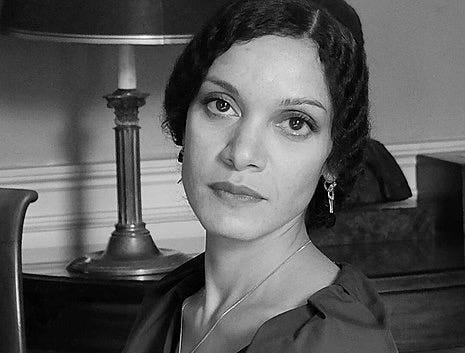
The current mania for ‘decolonisation’ puffs itself up as the champion of the West’s victims. So, when a dark-hued woman, born in Morocco with a Muslim background, speaking Arabic and French, and now settled in Oxford, declares her love for the heritage of Britain and the West, exposes the historical distortions of their ‘woke’ critics, and warns of their racial divisiveness, she commands attention.
While her book (which you can and should purchase here) treats the gamut of Culture War issues—statues, diversity, and cultural appropriation—its beating heart lies in the deconstruction of the ‘progressive’ narrative of White oppression and Black victimhood. Hence the title: ‘Not Your Victim’.
Marie Kawthar Daouda observes how this tale exalts the agency of the Westerner by depressing that of the African. It makes of European transatlantic slavery a unique evil. Yet, this ignores the fact that of the 41 million Africans enslaved, Europeans traded 30 per cent (the British, under 8 per cent). Arabs drove the majority across the Sahara or sailed them across the Indian Ocean. And since Africans did virtually all the initial enslaving, they were complicit in 100 per cent.
In her observation, Daouda echoes another Francophone, Pascal Bruckner. In The Tyranny of Guilt: An Essay on Western Masochism (2006), Bruckner explains the excess in European (and by extension, Western) self-criticism as “the paternalism of the guilty conscience: seeing ourselves as the kings of infamy is still a way of staying on the crest of history…. Europe is still messianic in a minor key … Barbarity is Europe’s great pride, which it acknowledges only in itself; it denies that others are barbarous, finding attenuating circumstances for them (which is a way of denying them all responsibility)”.
While ‘progressive’ Westerners feed their own sense of moral superiority by infantilising non-Western Others, the latter see their opportunity and exploit it. “Victimhood”, writes Daouda, “is power”: it confers political and diplomatic advantage. So, the African Union, with nary a hint of embarrassment, starts to lobby Britain for reparations.
Apart from the historical nonsense and inequity of it, the ‘decolonising’ narrative sets White against Black. So, while victimhood may give “a sense of purpose …. it does so through fostering divisive anxiety through blame.” It tempts members of ethnic minorities to give themselves over to racial resentment, and members of the white majority, feeling unjustly slandered, to respond in kind. Thus, it “nurtures the very prejudices it claims to fight”.
Addressing the false ‘decolonising’ prophets, Daouda writes, “Your self-flagellation hurts you while doing nothing other than patronizing and infantilizing people like me, the supposed victims of your empires. We become, in your mind, eternal props in your indulgent theatre of cultural self-harm. Many of us respect, cherish, love the culture and history that you hate.” Then, turning to the rest of us, unconvinced by the ‘decolonising’ narrative but too intimidated to say so out loud, she offers words of salvation: “I hope to help you be grateful for what you have, through the eyes of an immigrant grateful to have received it”.
“She speaks with wisdom,
and faithful instruction is on her tongue.”
Amen!