

1. The case for reparations
European (and British) transatlantic slave-trading and slavery was a crime against humanity unique in scale and brutality;
The enslavement of Africans made an enormous contribution to British industrial prosperity.
Contemporary Caribbeans and Africans now suffer economic and other disadvantages because of British colonialism, especially slavery.
Therefore, the British owe Caribbean and African states reparations.
However, …
2. The universality of slavery
Slavery and slave-trading were universal practices from the dawn of history, conducted by peoples of every skin-colour on every continent—from ancient Mesopotamia to the Ottoman Empire in the early 20th century, and from Brazil to New Zealand.
Of an estimated minimum of 41m Africans enslaved and mostly transported across the Atlantic, the Sahara, and the Indian Ocean, Europeans were responsible for 31% (12.75m); Arabs, for 53.6% (21.96m); the Sokoto Caliphate in the year 1860 alone, for 9.76% (4m); and the Ottomans in 1800-1900, for 3.14% (1.3m) .[1]
One authoritative estimate has it that, in 1804, there were 45m chattel slaves worldwide, most of them (37m) in Asia.[2] That is to say, in that single year there were almost 14 times the total number of chattel slaves traded by the British (3.258m) mostly in one hundred and thirty-five years (overwhelmingly from 1672 to 1807).
Otherwise put, the annual average number of African slaves transported by the British was about 24,000. In 1804, this amounted to 0.05% of the 45m chattel slaves worldwide.
3. African complicity
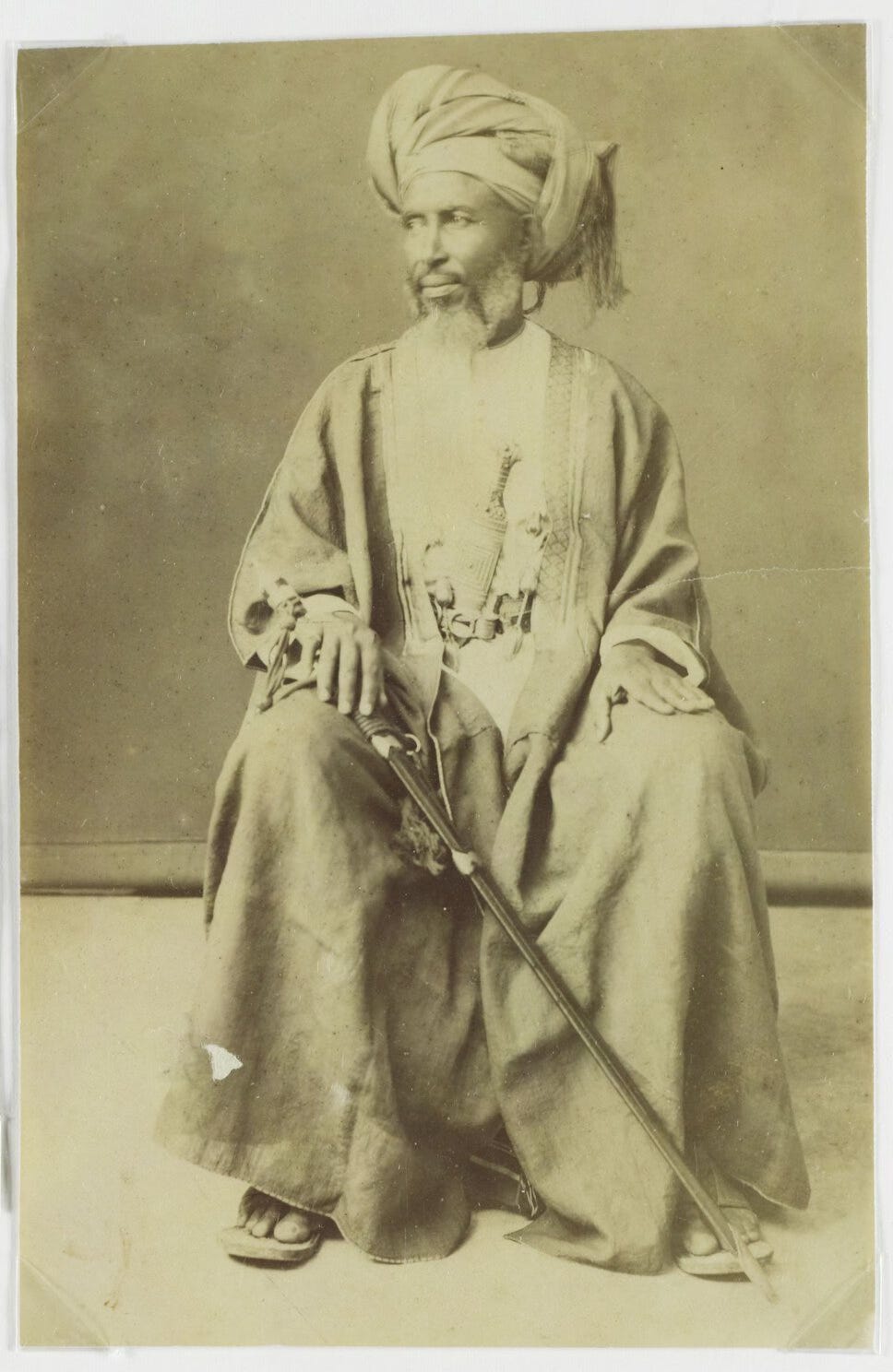
Since most African slaves were brought to traders by Africans, the latter were the primary enslavers of almost all 34.71m slaves traded to Europeans and Arabs.
When the British sought to end the slave-trade in the 19th century, African rulers resisted. According to the Beninese historian, Abiola Félix Iroko, “[w]hen the slave trade was abolished [by the British], Africans were against abolition. King Kosoko of Lagos was against abolition at the time .… Of those who were sold and had offspring … [s]ome returned home … [and] became, in turn, slaveholders and bought slaves for their correspondents who remained in Brazil. Africans resumed this trade after abolition”.[3] John Iliffe, Professor of African History at Cambridge University, agrees, writing that “[m]any African leaders resisted the abolition of the slave-trade. Kings of Asante, Dahomey, and Lunda all warned that unsold captives and criminals would have to be executed”.[4]
The notorious ivory- and slave-trader in Congo, Hamed bin Mohammed al Mujabi (‘Tippu Tip’), protested against abolition in 1881: “White people have quite false ideas about our customs and habits. Everything which doesn’t exist with them – even if it has ended recently – they insist on abolishing immediately everywhere else!”.[5]
In the years before 1850, the Fulani people of what is now northern Nigeria ran vast slave plantations employing perhaps 4m African slaves—more than the total number of slaves traded by the British over a century-and-a-half.[6]
The ancestors of the President of Ghana, John Dramani Mahama, who is leading the campaign for reparations from Britain, were probably slave-owners.[7]
