

As I hinted in last week’s posting, friction with the contingent particularities of actual cases is often fruitful in testing, refining, and developing ethical concepts. So, this week I will advance my pursuit of moral bottom-lines by analysing three cases. The cases that I have selected are historical, rather than the abstract inventions of philosophical imagination, since I want their lessons to be realistic. Since they are also political, we should bear in mind that what we glean from them might not apply in non-political contexts.
Historical case I: The Peace of Vereeniging, 1902
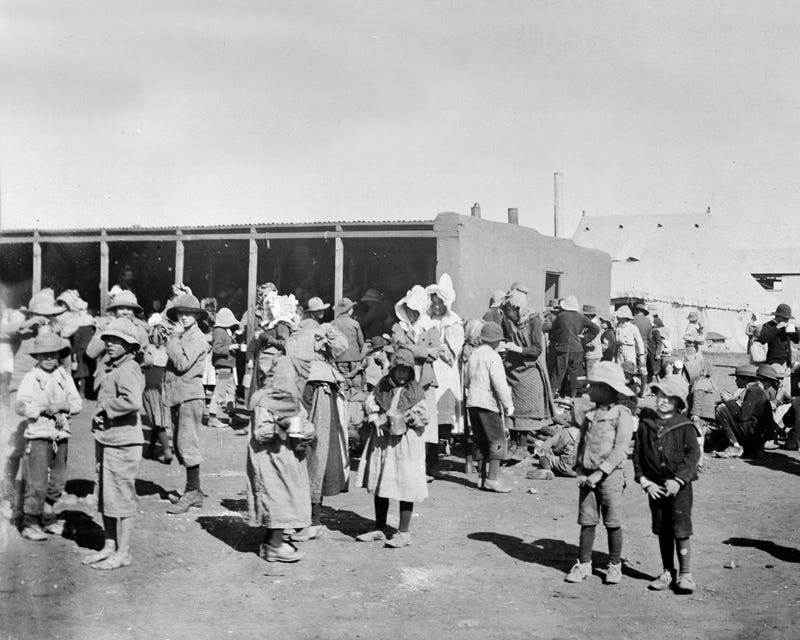
The first case is the Peace of Vereeniging in 1902. This was the final settlement of the Second Anglo-Boer War of 1899-1902, fought in South Africa between the British and the two Afrikaner or Boer republics of the Transvaal and the Orange Free State. The war had been launched by the Boers with an invasion of Natal and Cape Colony. Yet their invasion was preemptive, because they perceived, with some good reason, that the British were angling for a show-down. What were the primary motives and intentions of the British? These varied among the leading agents, but, with due respect to Marxist historians, seizure of the diamond and gold mines in the Rand was not, I think, among them. British policy was led by Sir Alfred Milner who was an Apostle of the superior virtues of fair, efficient, and modernising British administration. Milner wanted to give South Africa the benefit of such virtuous government, and to secure regional peace between Afrikaner and British, White and Black, by creating an imperial confederation of states, as had recently been achieved in Canada. Initially, Milner had hoped to woo the Boers to his scheme, but eventually he came to the conclusion that it would either have to be forced upon them or abandoned altogether. One of the reasons that the Boer republics resisted absorption into the British Empire, even with confederal autonomy, was that they deeply resented British criticism of their mistreatment of black Africans and correlative interference by the imperial authorities to secure African rights. Cape Colony had granted black Africans the vote, under certain conditions, as early as 1853 (seventeen years before the U.S.A.). And in the 1881 Convention of Pretoria, which ended the First Anglo-Boer War, the British had insisted on the suzerainty of the Empire, partly to secure the right of imperial authorities to intervene in defence of black Africans.[i]
However, at the Peace of Vereeniging in 1902, which ended the Second Boer War, the British agreed to let the question of African rights be decided by the Boer republics, after they had been removed from post-war imperial supervision and granted confederal autonomy. That is, it was agreed that the republics should decide the matter for themselves. Some judge this to have been a lamentably bad compromise, because it involved the simple surrender of a humanitarian cause and demonstrated that the British had never really cared about African rights in the first place. It exposed their humanitarian claims as mere rhetoric. Such is the view of the Anglo-Irish historian Thomas Pakenham, whose fine book on the Boer War would be even better, were it not for the unmistakeable sound of an anti-British axe grinding.[ii]
I agree with Pakenham that the treaty would have been a bad compromise, if it really had expressed a simple or casual abandonment of the good of justice for Africans. However, there is a plausible, alternative reading. The Second Boer War had taken the British far longer, and cost them far more, to win than they had expected. In its latter stages it had moved into a guerrilla phase and was accordingly very bitter indeed. The Boer republics attracted a lot of international sympathy, and the British a correlative amount of opprobrium. At its end, both Milner and Herbert Kitchener, the senior British military commander, were extremely keen to make a sustainable peace and to bind up the deep wounds inflicted upon the relationship between Afrikaner and Briton. They perceived that to insist on African rights would be to pour salt in those wounds and could result in the resumption of war. They also perceived that for the imperial authorities to try and enforce such rights in the republics would require a level of military and financial commitment that could not sustain domestic political support. So, they compromised. But they did not compromise for trivial reasons: they wanted to avoid the resumption of bitter war and the futile imposition of military occupation. Nor did they simply surrender the cause of African well-being. Rather, they compromised in the hope that, long-term, once the Boer republics had settled down in the British Empire and discovered the benefits of its administration, and once immigration had increased the British proportion of their populations, the issue of the rights of black Africans could be successfully addressed by political means.[iii]
How does this story further our understanding of what makes for a bad compromise? It draws our attention to the moral distinction between, on the one hand, a case where the pursuit of a human good is abandoned entirely or suspended for insufficiently weighty reasons and, on the other hand, one where the pursuit of such a good is prudently and tactically suspended in the face of current political realities, but not abandoned strategically. The former involves a bad compromise; the latter, a good one. Here a good compromise is revealed to be an instance of Realpolitik in its original sense—that is, not at all the cynical, ruthless pursuit of power, but rather the canny pursuit of liberal, humane goals by politically realistic, patient, gradual means.[iv]
Historical case II: The Yalta Agreement, 1945
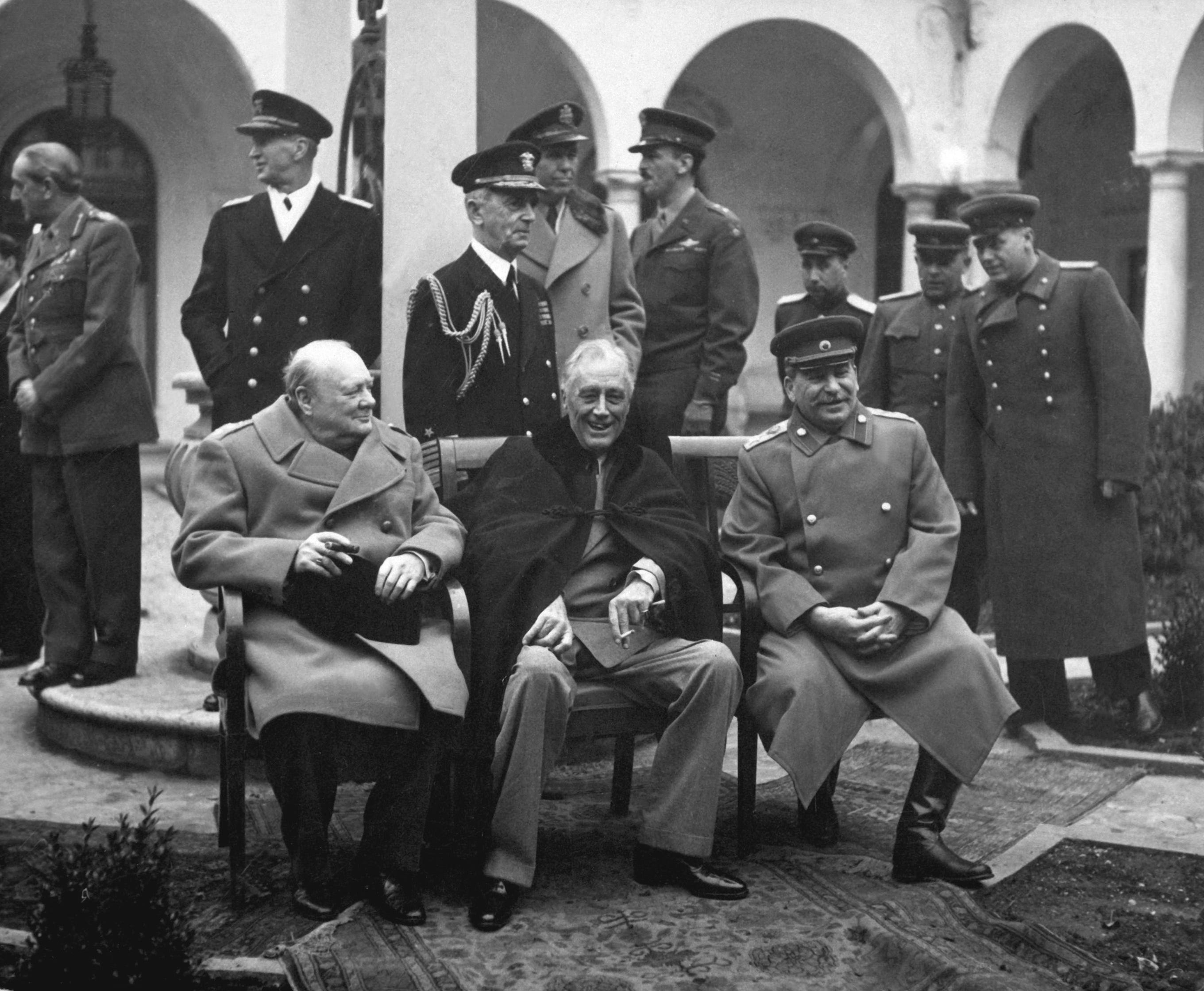
My second historical case is the agreement between Roosevelt, Churchill, and Stalin at Yalta in February 1945, which resulted in the forced repatriation of Soviet soldiers and citizens to the USSR, where many of them were executed, and also in the establishment of repressive Soviet rule over Central and Eastern Europe. This is the subject of extended analysis by the Israeli philosopher, Avishai Margalit, author of a rare book-length treatment of the ethics of compromise.[v]
Margalit’s basic criterion of a bad compromise is that it is one that agrees, actively or passively, to “establish or maintain a [permanent] regime of [systematic] cruelty and humiliation—in short, an inhuman regime”.[vi] “A compromise to establish or maintain racist regimes is”, he writes, “the epitome of rottenness”.[vii] That is rather low-hanging fruit, but it does at least give us a clear extreme against which to measure less black-and-white, more ambiguous phenomena. Nevertheless, it needs some qualification, because it would probably—and to my mind, wrongly—judge the Peace of Vereeniging to have been a rotten compromise.
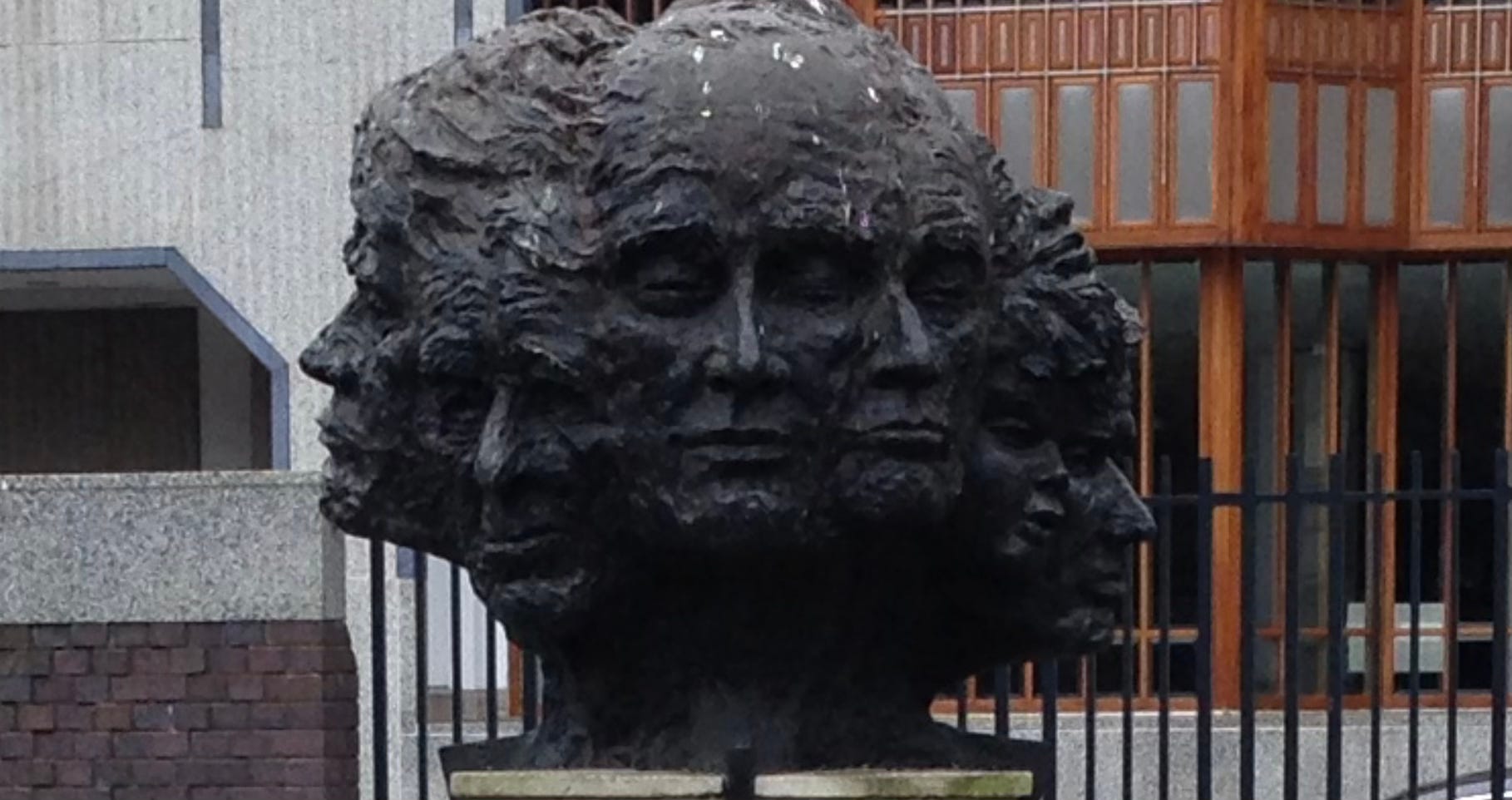
Margalit goes on to develop his criterion, when he distinguishes memorably between compromise that is “a cockroach in the soup” from that which is “a fly in the ointment”.[viii] The war-guilt clause in the Versailles Treaty he reckons a fly, because it was a flaw, but not one that morally disqualified the treaty as a whole. Yalta’s agreement to the “systematically cruel and humiliating rule” of Stalin over Eastern Europe, however, he considers a cockroach.[ix]
Margalit acknowledges that the text of the Yalta agreement itself only agreed to ‘repatriation’, not ‘forced repatriation’, and it did agree that “the liberated peoples could freely choose their own form of government”.[x] He also acknowledges that the agreement was concluded in part to sustain the justified Allied war against Nazi Germany.[xi] Nevertheless, Margalit argues that it was generally understood that the repatriation would take place with or without the consent of the displaced Soviet citizens; that the Americans and British knew what lay in store for the returnees; and that “[t]here is not a shred of evidence” that Western insistence on voluntary repatriation would have jeopardised the war-time alliance with Stalin or that it would have jeopardised the return of British and American prisoners of war from East Prussia and Poland. [xii]Moreover, he shows evidence that Anthony Eden was keen to avoid permanent responsibility for Soviet citizens who did not wish to return.[xiii] In the end, therefore, he judges that the West’s acquiescence in Stalin’s demand for forced repatriation was a matter, not of necessity, but of expediency.[xiv] It was a bad compromise.
Margalit might be right. Nevertheless, I think that his reading needs further complication, at least. First, insofar as the returnees were Soviet citizens, the responsibility of the Western allies for them was limited and secondary.
Second, since the Soviet returnees had fought for the Nazis, they were traitors and so, arguably, deserved some punishment. Certainly, the British themselves saw fit to execute a number of their own citizens who had been found guilty of working for the enemy during the Second World War. Nevertheless, if we suppose that the mass execution of Soviet returnees was disproportionately harsh, the blame for that lies first and foremost with Stalin. Pace utilitarians, we are not primarily responsible for the effects of other agents’ choices.
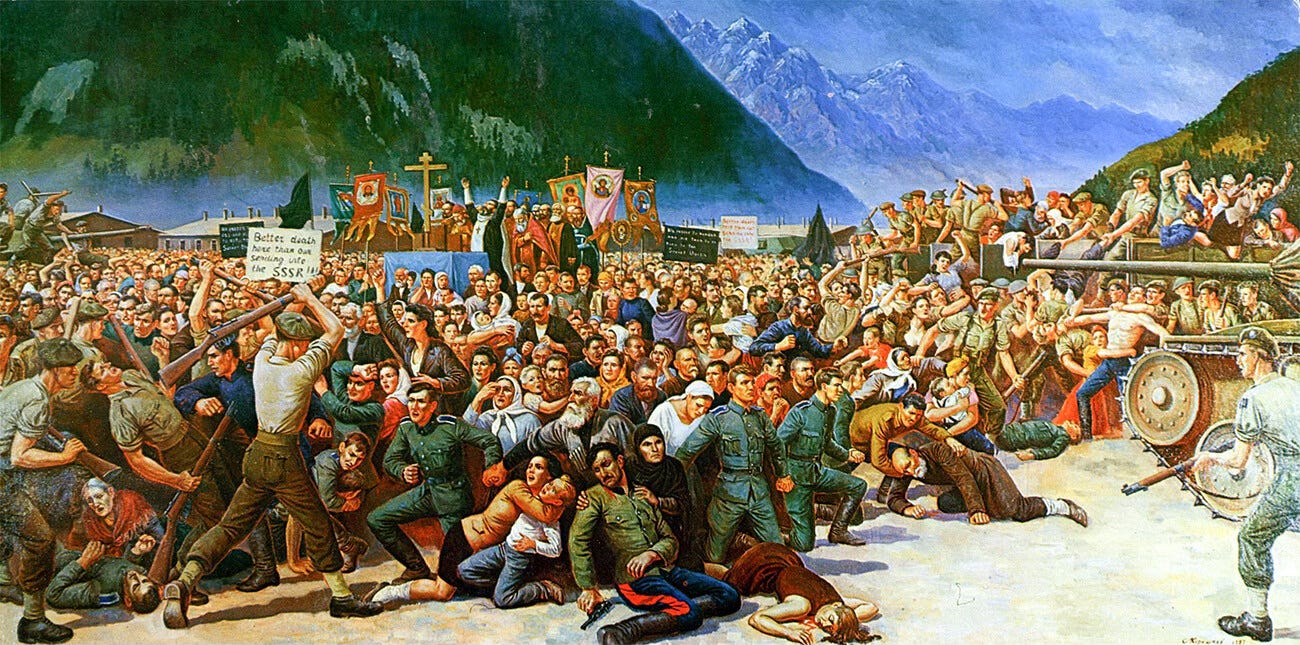
Third, does not Margalit go too far in claiming that the Anglo-Saxon Allies knew what would befall the returnees? They might have suspected, even strongly suspected, but surely they could not have known. So, if there was doubt, were they wrong, under the fraught circumstances, to give Stalin benefit of it? In sum, it is true that Roosevelt and Churchill did not have to compel repatriation. However, given their limited responsibility, given uncertainty about how the Soviets would treat the returnees, given the arguable propriety of capital punishment for treason in wartime, and given the priority of maintaining the anti-Nazi alliance, it is not clear to me that their complicity in forced repatriation was rotten.
Regarding Stalin’s “systematically cruel and humiliating rule” over Eastern Europe, I note that this is the main reason that Margalit judges Yalta to be more cockroach than fly. And yet he recognises that the treaty itself agreed to the political self-determination of the liberated peoples, and that “[t]he Western Allies could do very little in Yalta to loosen the grip of Stalin on Eastern Europe”.[xv]
So what lessons should we learn from Yalta about the character of bad compromises?
