

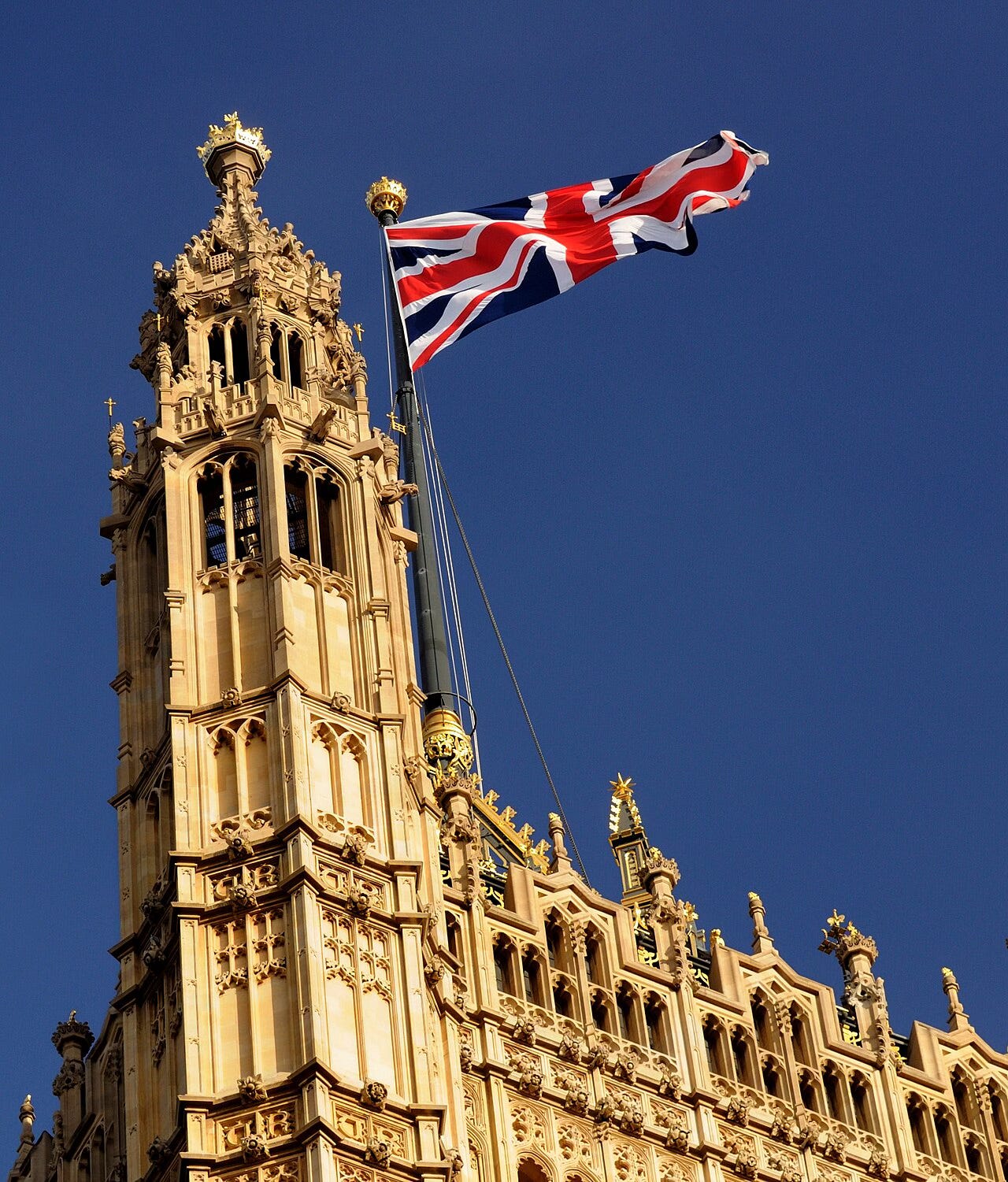
A major—and entirely reasonable—concern raised by the massive scale of recent immigration of people to Britain from very foreign cultures in Africa and Asia is the need for proper social integration. Any society that wishes to remain viable must impose a measure of unity on its cultural diversity. But unity around what? Integration into what? What is or should be the common culture of all British people? What are the British values we should all share? Almost invariably, attempts to answer such questions fail to convince, seeming banal and platitudinous.
Later this month we will see Swift Press’s publication of Our Islands’ Story: A Better Story about Britain, co-authored by me and the Cambridge historian, Robert Tombs. The main two chapters offer fresh, succinct accounts of the history of Britain and of its empire. From this narrative, the final chapter distils a series of valuable institutions, traditions, and attitudes that history has bequeathed the British and that deserve their appreciation, conservation, and promotion today.
Here I try to render those valuable items into a set of ‘British values’ or ‘things that all British people ought to value’. Of course, my list isn’t politically neutral; it bears the marks of my conservative view of things. But then, I can surely be forgiven for that, since I believe that my view is the right one.
Some of my items are not distinctively British, but values can be authentic and characteristic without being distinctive. That other people happen to share them doesn’t make them any less ours. And in quite a few cases, we share them because other people have borrowed them from us.
Other items may appear banal, but that’s only because we take them entirely for granted. We shouldn’t. For what we are now accustomed to, once had to be fought for and won. And what has been won, can always be lost. We should take care.
So, here are Biggar’s British Values:
1. A mixed constitution that combines democracy, ‘aristocracy’, and monarchy.
The popularly elected, democratic element makes the House of Commons representative of the whole people and holds government accountable to it, thereby eliciting popular consent and trust.
The House of Lords comprises, ideally, an ‘aristocracy’ (or ‘rule by the best’), in that it contains members of wide experience and substantial expertise. The ideal is somewhat realised. As Lord John Reid, former Labour Defence Secretary, said to me last year, “This place [the Lords] has lots of dross, but it also has diamonds”.
The monarchy now functions symbolically as a focus of national loyalty above party politics, and practically as a supporter of public service at the level of civil society beneath party politics.
The thoughtless, knee-jerk Left would destroy this balance, reducing the constitution to a single, politically divisive, democratic element.
2. Public-spirited, effective government that commands popular consent and trust and is therefore capable of upholding the law and affording the people wide liberty.
This was being corroded by membership of the EU and is now being threatened by the excessive interference of foreign courts and political activism in the civil service.
3. Courts that interpret law that has been democratically created by elected legislatures and carefully defined by parliamentary process, and whose interpretation has due regard for the wisdom of the past expressed in legal precedent.
This is being threatened by the European Court of Human Rights, whose judges behave like an oligarchy, exercising excessive freedom to make law. That is partly because they operate under a Convention comprising very broadly defined rights, and partly because the court has adopted the doctrine that the Convention is ‘a living instrument’ that it has the duty to develop in a ‘progressive’ direction.
This is not a paywall. To continue reading, please enjoy a free subscription:
Multiculturalism's veneration of minority groups and their parallel societies is diluting the core beliefs, principles, and standards that have traditionally guided behaviour and a shared idea of what is right and wrong. The Church of England may have declined in recent decades, but up until about 20 years ago its values permeated society and state still. We were tolerant to the point of tolerating the intolerant.
This valuable list of what is distinctively British needs promulgating and not least in Westminster and the main media whose inhabitants and controllers would benefit from travelling widely in the UK to see how these values are eroding or being actively undermined.
We should not apologise for who we are (or were it sometimes feels like), nor should we trumpet who we are/were jingoistically. There needs to be a quiet confidence without shyness, a daily affirmation in who we are that is visible by its inner certainty.